Patents

Intellectual Property Laws Amendment Bill 2014

After the consultation, the Intellectual Property Laws Amendment Bill 2014 has been introduced.

  • Schedules 1 and 2 aim to implement the TRIPS Protocol:

    According to the EM:

    Under the new scheme, Australian laboratories will be able to apply to the Federal Court for a compulsory licence to manufacture generic versions of patented medicines under specific conditions, and export these medicines to developing countries. Adequate compensation for the patent holder will be negotiated, to ensure that they are not disadvantaged by the arrangements.

    Schedule 1 introduces provisions to implement the “interim waiver” agreed in the Doha Declaration 2001; Schedule 2 implements the TRIPS Protocol regime agreed in 2003 (or, I think, 2005).

    According to the EM, only one licence has been issued under these regimes – Canada in 2007. Apparently, Canadian generics would like to engage in further licensing, but the procedures are too complicated. Also, Least Developed Countries do not need to provide patent protection until 2016 and there is said to be a lack of awareness of the regime.[1]

  • Schedule 3 confers jurisdiction over plant breeder’s rights matters on the Federal Circuit Court (in addition to the Federal Court)
  • Schedule 4:
    • introduces the “single examination” model for patent applications in Australia and New Zealand;[2]
    • the single regulatory regime for patent attorneys and trade mark attorneys in both countries – the so-called trans-Tasman regulatory regime; and
    • provides for a single address for service in either Australia or New Zealand to be used under the patents, trade marks, registered designs and plant breeder’s rights legislation.
  • Schedule 5 is headed “Technical Amendments” which include repealing “unnecessary document retention provisions” and addressing “minor oversights in the drafting of” the Raising the Bar Act. These include:
    • amending s 29A so that an international applicant under the PCT cannot require anything to be done in Australia until the application enters the national phase;
    • amending s 29B so that only the prescribed period under s 38(1A) applies to Paris Convention applications;
    • amending ss 41 and 43 in relation to disclosure requirements for micro-organism inventions
    • amending s 43 to permit reference to the combination of prescribed documents, not just to individual prescribed documents alone
    • the defence in s 119(3)(b) will be amended to bring it into line with the amended form of s 24(1)(a)
    • amending s 191A so that the requirement for the Commissioner to hear both parties prescribed in s 191A(4) applies only in entitlement disputes.

Intellectual Property Laws Amendment Bill 2014

Explanatory memorandum


  1. The Regulatory Impact Statement included in the EM estimates that 63 in-house legal professionals and 128 patent attorneys in external firms will need to familiarise themselves with these changes for a total start up cost to business of $13,782.60 and an ongoing annual cost of $105. These costs include allowance for savings in legal costs because it will be possible to bring proceedings for infringement of plant breeder’s rights in the Federal Circuit Court, rather than the Federal Court. Perhaps confusing costs with earnings, the Regulatory Impact Statement relies on the ABS Employee Earnings and Hours Survey to estimate the average cost of patent and trade mark attorneys as $50 per hour (junior solicitors $60 per hour, IP attorneys $74.10 per hour and barristers $92.70 per hour, after including a 50% loading for overheads). The Statement does recognise that charge out rates “for lega”for legal professionals can range from $120 per hour to $800 per hour or more, viewed on 4 December 2013 at http://www.legallawyers.com.au/legal-topics/law-firm-sydney/solicitor-prices/. These costs do not reflect the opportunity cost of labour.” You may also be interested to know that the Regulatory Impact Statement estimates the costs of an application to the Federal Court for a licence at around $21,650 for the applicant.  ?
  2. The substance of the two countries’ respective patent laws is not being harmonised (yet).  ?

Intellectual Property Laws Amendment Bill 2014 Read More »

The statutory right to terminate a patent licence

Section 145 provides the licensee of a patent with a statutory right to terminate the licence on 3 months’ written notice after the patent has expired. What happens, however, if more than one patent has been licensed?

MPEG LA is the patent pool vehicle which licenses the essential patents for the production of DVDs, DVD players and some other video codecs.[1] It granted a licence of a number of patents to Regency Media. In June 2012, after some, but not all, of the patents had expired, Regency Media sent a notice seeking to exercise its right to terminate under s 145. By the trial, some other patents had expired, but some of those licensed were still extant.

Section 145 provides:

Termination of contract after patent ceases to be in force

 (1)  A contract relating to the lease of, or a licence to exploit, a patented invention may be terminated by either party, on giving 3 months’ notice in writing to the other party, at any time after the patent, or all the patents, by which the invention was protected at the time the contract was made, have ceased to be in force.

(2)  Subsection (1) applies despite anything to the contrary in that contract or in any other contract.

The short answer: according to Flick J it appears the licensee has to wait until all the licensed patents have expired before the licensee can exercise the right under s 145.

A bit longer answer: Acknowledging the force of Regency Media’s argument that each patent could be described as being for a patented invention (a term not otherwise defined in the Act), Flick J accepted MPEG LA’s argument. According to MPEG LA, the licence granted rights over three groups of technologies:

  • the MPEG–2 Decoding Products;
  • the MPEG–2 Encoding Products; and
  • the MPEG–2 Packaged Medium,

each of which groups constituted a patented invention for the purposes of s 145 and so s 145 could not be triggered until all had expired.

At [40], Flick J appears to arrive at this conclusion because each of the three groups constituted a “manner of manufacture” in the NRDC sense irrespective of how many patents fell within the particular group. His Honour also thought s 145 was drafted before modern licensing administrators came on to the scene and so may well be inaptly worded to deal with such creatures. However, his Honour considered at [43]:

A court, should be slow to prefer a construction which would permit the termination of an agreement in respect to patents which have not ceased to be in force and which would deny to a patent holder the benefit of the payment of royalties in amounts that have been the subject of agreement. Section 145 manifestly does not permit a contract to be terminated where “all of the patents, by which the invention [is] protected” have not ceased to be in force.

MPEG LA, L.L.C. v Regency Media Pty Ltd [2014] FCA 180


  1. A modern day American antitrust miracle: the official version; Wikipedia’s version.  ?

The statutory right to terminate a patent licence Read More »

Securities over IP

IP Australia has published a reminder:

The transitional period to register any securities (charges, mortgages etc.) you may have taken out over IP ( registered trade marks, patents, designs etc.) on the Personal Property Securities Register expires on 31 January 2014.

The Personal Properties Security Register is a national register of claims to security interests over personal property (which includes our imaginary subject matters) in essence to provide a one stop shop for notice about such claims.

If you (or your client) has taken out a security over someone else’ intellectual property or where the other person’s intellectual property is being used as collateral for repayment, the security should be registered on the Personal Property Securities Register. In very broad terms: if the security isn’t registered in the Personal Property Securities Register, its claim to priority over any later security or even enforceability could be lost.

IP Australia’s warning points out that it is not enough to have registered the security interest in a register of IP such as the Trade Marks Register, the Patents Register, the Register of Designs or the Register of PBR. These registrations will not be transferred automatically to the Personal Property Securities Register. Morever, registration of the security interest on one or more of those IP Registers will not take priority over a later registration on the Personal Property Securities Register.

So, if you or your client have taken out such a security and haven’t registered it in the Personal Property Securities Register yet, ‘hurry, hurry, hurry; quick, quick, quick’ (with apologies to Alexis Jordan).

Although IP Australia’s warning relates specifically to the registered IP it administers, the legislation also applies to unregistered IP such as copyright.

IP Australia’s media release.

IP Australia’s general overview of PPS

PPS R.

Securities over IP Read More »

Summer must be over …

IP Australia has released a consultation paper (pdf) (with exposure draft bill (pdf) and draft EM (pdf)) on the proposed Intellectual Property Laws Amendment Bill 2014.

According to the overview, the proposed bill will:

  • implement the Protocol amending the World Trade Organization Agreement on Trade-Related Aspects of Intellectual Property (TRIPS Protocol – links via here), enabling Australian medicine producers to manufacture and export patented pharmaceuticals to countries experiencing health crises, under a compulsory licence from the Federal Court
  • extend the jurisdiction of the former Federal Magistrates Court, the Federal Circuit Court, to include plant breeder’s rights matters
  • allow for a single trans-Tasman patent attorney regime and single patent application and examination processes for Australia and New Zealand, as part of the broader Single Economic Market (SEM) agenda
  • make minor administrative changes to the Patents, Trade Marks and Designs Acts to repeal unnecessary document retention provisions that are already adequately governed by the Archives Act 1983
  • make minor technical amendments to the Patents Act to correct oversights in the drafting of the Intellectual Property Laws Amendment (Raising the Bar) Act 2012 which was passed by Parliament in March 2012.

The proposed bill succeeds the Intellectual Property Laws Amendment Bill 2013, which proved rather more controversial than the former government, or its advisors, expected (see, for example, here (pdf)) and lapsed with the calling of the election.

According to the consultation paper, the proposed bill largely replicates the lapsed bill, but there have been changes in 5 key areas.

The provisions relating to Crown Use in the lapsed bill have been withdrawn and will be the subject of a separate bill in the future.

The provisions to implement the TRIPS Protocol drew much of the controversy. According to the consultation paper, these have been amended in a number of important respects. First, it is proposed that separate applications will be required for each patent that a person seeking a licence to manufacture under the TRIPS Protocol requires. It is hoped that this will address concerns about an imbalance of negotiating power if the patentee of one patent also required access to someone else’s patent(s) to take advantage of the proposed compulsory licence.

Secondly, the proposed compulsory licence will be to exploit the patent for the relevant purpose rather than the more limited “work” the patent.

To preclude the need to change the regulations when (perhaps that should be “if”) there is a change in a country a country qualifies as a permissible import destination, and the notification requirements according to whether the country is a member of the WTO or an LDC, the regulations will refer simply to the relevant lists maintained by the WTO and/or the UN.

Whether these changes will meet the substantive objections raised against the lapsed bill remains to be seen.

Unfortunately, the draft bill fails to address one important oversight from the Raising the Bar Act. The Raising the Bar Act replaced the standard applicable during examination and opposition to the grant of a patent from one of practically certain to be invalid to one of balance of probabilities: see Sch. 1 Part 2 items 39 to 54.

It has not been determined finally what standard applies in trade mark proceedings, although the preponderance of authority in the Federal Court appears to support the “practically certain to be invalid” standard to the examination and opposition of trade marks. See for example NV Sumatra v BAT at [16] – [38]. This position was adopted by analogy to, and for conformity with, the position then prevailing for patents. The reasons why this was changed for patents are equally applicable for trade mark applications. One would think it was high time to address this.

Comments and submissions are required by 7 February 2014.

Links to IP Australia’s documents via here.

Summer must be over … Read More »

Sanofi v Apotex – infringement

The previous post looked at the High Court’s ruling that Sanofi’s patent for a method of medical treatment was patentable subject matter as a manner of manufacture. This post looks at the infringement ruling.

You will recall that the patent for leflunomide itself has expired, but claim 1 of Sanofi’s relevant patent is for:

[a] method of preventing or treating a skin disorder, wherein the skin disorder is psoriasis, which comprises administering to a recipient an effective amount of [leflunomide].

Dermatologists do not prescribe leflunomide for the treatment of psoriasis, but rheumatologists do prescribe leflunomide for the treatment of rheumatoid arthritis (RA) and psoriatic arthritis (PsA). Apparently, almost every person who has PsA will have, or will also develop, psoriasis. When leflunomide is prescribed for the treatment of PsA, “it is usually expected to also prevent or treat the patient’s psoriasis, if that person has a concurrent case of psoriasis.”[1]

Apotex had received marketing approval from the TGA for the treatment of RA and PsA (but not psoriasis specifically). Its product information stated:

“INDICATIONS

Apo-Leflunomide is indicated for the treatment of:

. Active Rheumatoid Arthritis.

. Active Psoriatic Arthritis. Apo-Leflunomide is not indicated for the treatment of psoriasis that is not associated with manifestations of arthritic disease.”

The Federal Court – Jagot J at first instance and the Full Court had agreed with Sanofi that Apotex’ supply of leflunomide in these circumstances infringed s 117. While the reasoning was a bit different in each case, it essentially turned on 2 propositions:

First, s 117(2)(b): Apotex had reason to believe its leflunomide would be used to treat psoriasis because its administration to PsA sufferers would usually involve treatment of psoriasis too.

Secondly, s 117(2)(c): in any event, Apotex’ product information was an instruction to use leflunomide in the treatment of psoriasis when it was being prescribed to treat PsA.

Crennan and Kiefel JJ (with whom French CJ and Gaegeler J agreed) rejected both bases and held that Apotex did not infringe.

The patent gave Sanofi a very limited monopoly – use of leflunomide for a particular purpose. This appears to have led to an important point of policy at [302]:

…. It is difficult to understand how the supply of an unpatented product, the use of which by a supplier would not infringe a method patent, can give rise to indirect infringement of a method patent by a recipient of the unpatented product from the supplier. The difficulty reflects the prior art and Sanofi’s limited novelty in the hitherto unknown therapeutic use of the pharmaceutical substance, which is the claimed subject matter of the Patent.

Notwithstanding the interpretation of the product information reached by all four Federal Court judges below, there was no instruction or recommendation of the kind required by s 117(2)(c). Bearing in mind the regulatory regime imposed by the TGA at [303]:

…. In light of the provisions of the TGA, to which reference has been made, the expression “indication” in the product information document is an emphatic instruction to recipients of Apo?Leflunomide from Apotex to restrict use of the product to uses other than use in accordance with the patented method in claim 1. ….

It was simply an instruction to use leflunomide for the treatment of PsA or RA. Nor was s 117(2)(b) engaged. Rather than looking to the effect of the administration of Apotex’ leflunomide, it was necessary to look at the purpose it was being prescribed for: in the relevant cases, the treatment of PsA. At [304] therefore:

it was not shown, nor could it be inferred, that Apotex had reason to believe that the unpatented pharmaceutical substance, which it proposes to supply, would be used by recipients in accordance with the patented method, contrary to the indications in Apotex’s approved product information document.

This suggests that it will be very difficult to establish infringement of a claim to the use of a medicine for a patented purpose where the therapeutic compound itself is no longer patented and the the patented purpose is not one of the indications for which the supplier has obtained TGA approval. One might wonder about the situation where the supplier / respondent was aware of significant off-label use. In this case, however, the High Court seems to have characterised the infringing effect as purely incidental. That was no doubt supported by the different specialists who might prescribe leflunomide for the different purposes.

The High Court did not find it necessary to discuss the trial judge’s finding [2] that leflunomide was not a staple commercial product so that s 117(2)(b).

So, after all that, Apotex did not infringe the patent. We at least have a clear ruling (albeit obiter dicta in that special High Court way) about the patentability of methods of medical treatment so far as the courts (and the current High Court) are concerned. I wonder how much the pecuniary remedies for Apotex’ infringement of copyright in the product informtion is worth?

Apotex Pty Ltd v Sanofi-Aventis Australia Pty Ltd [2013] HCA 50


  1. Crennan and Kiefel JJ at [182].  ?
  2. Sanofi v Apotex (No 2) at [270] – [273], on the footing that the relevant product for the purposes of s 117(2)(b) was the product as supplied by Apotex (and not leflunomide generally), which could be supplied and traded only for the 2 limited purposes indicated in the product information.  ?

Sanofi v Apotex – infringement Read More »

Apotex v Sanofi: manner of manufacture

As briefly noted last week, the High Court handed down its ruling in Apotex’ appeal. Although the case will be mainly remembered because Apotex lost its challenge to the patentability of Sanofi’s method of medical treatment, Apotex actually won on the patent infringement point. (As there was no appeal on that point, however, it was still liable for infringing the copyright in Sanofi’s product information.)

Claim 1 of Sanofi’s relevant patent is for:

[a] method of preventing or treating a skin disorder, wherein the skin disorder is psoriasis, which comprises administering to a recipient an effective amount of [leflunomide].

The patent for leflunomide itself has expired.

Apotex had received marketing approval from the TGA for the treatment of rheumatoid arthritis (RA) and psoriatic arthritis (PsA).

By a majority of 4 – 1,[1] the High Court held that:

  1. a a method of medical treatment is indeed patentable subject matter – a manner of manufacture[2] – under Australian law;
  2. a second or subsequent use of a known substance could also be patentable subject matter; but
  3. Apotex did not infringe by selling or supplying its generic leflunomide according to its product information.

manner of manufacture

All 5 judges accepted the orthodoxy of the NRDC decision as defining the approach to whether a claim was to a manner of manufacture. And all 5 judges accepted it was a broad and widening concept.

Crennan and Kiefel JJ identified NRDC as essentially requiring 2 conditions to be satisfied. For example, at [235], their Honours quoted the Wellcome case:

This principle [in the NRDC Case] extends to a process which does not produce a new substance but results in ‘a new and useful effect’. If the new result is ‘an artificially created state of affairs’ providing economic utility, it may be considered a ‘manner of new manufacture’ within s 6 of the Statute of Monopolies. (Crennan and Kiefel JJ’s emphasis)

At [278] – [285], their Honours identified 7 reasons why a method of medical treatment could be patentable. Gaegler J agreed with these 7 reasons and proposed an eighth.[3] Given the broad scope of the concept, Crennan, Kiefel and Gaegler JJ considered the crucial consideration was that there was no economic or ethical basis for distinguishing between the patentability of a pharmaceutical (or other medical) product and a method.[4] French CJ’s reasoning was similar to this point; considering the historical exclusion from patentability to be an anomaly for which no clear and consistent foundation had been established.[5]

In contrast, Hayne J in dissent considered at [143] – [150] that it could well be possible to distinguish between patenting medical products and methods of treatment. Instead, his Honour considered that a process would only be patentable if the product (in the sense of the result, outcome or effect) of the process, and not just the process itself, had economic utility. Hayne J considered that a method of medical treatment did not satisfy that criterion because (at [163]):

The effect of using the process is personal to the individual. It is not an effect which the person who owns the right to use the process, or any person other than the individual who has been treated, can turn to economic account in any way, whether directly or indirectly. If the individual who has been treated can turn the effect to economic account, he or she can do so only indirectly: by taking advantage of better health to make a more valuable contribution to national production. The individual is not a subject of commerce. The product of the process in the individual (having better health than might otherwise have been the case) cannot be sold. ….

Perhaps reflecting Hayne J’s approach to some extent, Crennan and Kiefel JJ at [287] did consider that there was a distinction to be drawn between uses of therapeutic substances and the activities and procedures of doctors when treating patients on the basis that the latter are “non-economic”:

There is, however, a distinction which can be acknowledged between a method of medical treatment which involves a hitherto unknown therapeutic use of a pharmaceutical (having prior therapeutic uses) and the activities or procedures of doctors (and other medical staff) when physically treating patients. Although it is unnecessary to decide the point, or to seek to characterise such activities or procedures exhaustively, speaking generally they are, in the language of the NRDC Case, “essentially non?economic” and, in the language of the EPC and the Patents Act 1977 (UK), they are not “susceptible” or “capable” of industrial application. To the extent that such activities or procedures involve “a method or a process”, they are unlikely to be able to satisfy the NRDC Case test for the patentability of processes because they are not capable of being practically applied in commerce or industry, a necessary prerequisite of a “manner of manufacture”.[6]

French CJ, however, at [1] and [44] expressly included surgical procedures in his Honour’s finding in favour of patentability.

second use of a known substance

As Crrennan and Kiefel JJ pointed out, NRDC itself involved a second or subsequent use of a known substance, the hitherto unsuspected properties of which squarely satisfied the requirements for inventiveness. Apotex’ reliance on this basis, therefore, failed at [291] in succinct terms.

the infringement question

… will have to wait for another day.

Apotex Pty Ltd v Sanofi-Aventis Australia Pty Ltd [2013] HCA 50


  1. French CJ, Crennan, Kiefel and Gaegler JJ; Hayne J dissenting.  ?
  2. Patents Act 1990 s 18(1)(a). The claim would, of course, also have to satisfy the other requirements including novelty, inventive step, utility etc.  ?
  3. Gaegler J appears to be alone in attributing weight to the potential disruption to business investments if the endorsement by Bristol-Myers v Squibb of the patentability of methods of medical treatment was overturned after 13 years.  ?
  4. See [282] for Crennan and Kiefel JJ; [314] for Gaegler J.  ?
  5. At [50]. See also [44] – [49].  ?
  6. Earlier, at [266] – [271], their Honours had noticed that Congress amended the US Patents Act to include §287(c)  ?

    “the effect of which is to permit the patenting of surgical methods to continue but to bar actions for patent infringement against medical practitioners (and ”related health care entit[ies]“) for ”the performance of a medical or surgical procedure on a body“.”

Apotex v Sanofi: manner of manufacture Read More »

Alice corp

The Full Federal Court has reserved its decision in Research Affiliates’ appeal; the Commissioner’s appeal in RPL Central is still pending.[1]

In the USA, Alice Corp. had a patent for a computerised method of reducing “settlement risk”, a type of escrow arrangement: the 10 judges in the Federal Circuit Court of Appeals came up with 5 different opinions of which Justice Newman memorably said:

[The 5 judgments have] propounded at least three incompatible standards, devoid of consensus, serving simply to add to the unreliability and cost of the system of patents as an incentive for innovation. With today’s judicial deadlock, the only assurance is that any successful innovation is likely to be challenged in opportunistic litigation, whose result will depend on the random selection of the panel.

Now, the US Supreme Court has agreed to try to sort it out.

ALICE CORPORATION PTY. LTD. V. CLS BANK INTERNATIONAL, ET AL., Docket No. 13–298 (Supreme Court 2013) via Patently-O


  1. The Full Court has also reserved in Cancer Voices re isolated DNA (although one might think there’s little scope for that to get up after Apotex v Sanofi.  ?

Alice corp Read More »

Apotex v Sanofi

Apotex v Sanofi Read More »

Patenting computer programs or business methods in Australia

At the end of August, Middleton J overturned the Commissioner’s refusal to grant an innovation patent for RPL’s computerised method entitled ‘Method and System for Automated Collection of Evidence of Skills and Knowledge’. Instead, his Honour held that the method was a manner of manufacture and, novelty and inventive step having been satisfied, patentable.

What the claimed invention was

In essence, the claimed invention allowed a user to access a single point of entry (for example, over the internet using his or her browser), retrieve information about particular qualifications, which was presented in the form of questions to the user, then provide answers and supporting documentation (still for example over the internet), which was then processed by a relevant certifying institution and, if the relevant criteria were satisfied, the relevant qualification would be awarded or, if not, the user could be presented with information about what further steps needed to be undertaken to satisfy the necessary criteria.[1]

This bald summary hardly does justice to what was involved. For example, there are a large number of registered training organisations or TAFEs (RTOs). Collectively, they offer some 3,500 different qualifications and some 34,000 Units of Competency. Any individual RTO therefore offered only a very small set of qualifications or units. RPL’s method, first, circumvented the need for an individual user to identify which RTO was appropriate as RPL’s method retrieved all the necessary information from online databases. Then, RPL’s method converted the criteria into a form of questions which the user could answer. So, to take an example from the judgment, the element of competency required for a particular unit relating to aged care:

demonstrate an understanding of the structure and profile of the aged care sector

became:

Generally speaking and based upon your prior experience and education, how do you feel you can demonstrate an understanding of the structure and profile of the aged care sector?

and a particular performance criterion associated with that:

all work reflects an understanding of the key issues facing older people and their carers

was converted in RPL’s method to:

How can you show evidence that all work reflects an understanding of the key issues facing older people and their carers?[2]

for enabling individuals to get their competency or qualifications recognised under the nationally accredited Unit of Competency scheme.

The specification identified the advantages flowing from this method with its single point of contact:[3]

Individuals are provided with a service which simplifies the identification of relevant Units of Competency, and the gathering of associated assessment information to enable [recognition of prior learning] to be performed. Training organisations are relieved of much of the administrative cost associated with performing [recognition of prior learning]. By the time the training organisation is contacted, the relevant Unit of Competency has already been identified, and required information associated with each of the assessable criteria has already been gathered and packaged in a form enabling an efficient assessment in relation to the [recognition of prior learning] process.

Why this constituted a (patentable) manner of manufacture

Middleton J noted at [127] that the test for “manner of manufacture” laid down in NRDC, CCOM and Grant required that the claimed invention result in an artificially created state of affairs in which a new and useful effect may be observed. This had to be of utility in practical affairs or be of an industrial, commercial or trading character and belong to the useful arts, not the fine arts, so that its value lay in a field of economic endeavour.

These criteria were satisfied. The results of the method were useful because at [129] it overcame difficulties involved in seeking out education providers and enabled recognition of prior learning. This was relevant to a field of economic endeavour: the education sector of the economy and thus had the necessary industrial, commercial or trading character.

While the information about RTOs and particular Units of Competency could be accessed individually in undifferentiated form over the internet, the method provided a single point of entry. In addition to the single point of entry:

[141] The computer programmed in accordance with the Patent further operates to process the retrieved information and to automatically generate data comprising an alternate means of presentation. This alternate means comprises a series of questions which can be presented to an individual user along with user interface elements which implement an online form suitable for the receipt of responses to those questions. An assessment server is programmed, again according to the teaching of the Patent, to present the form to the computer of an individual user, who preferably requires only conventional web browser software to access the assessment server via the internet. In particular, the form provides not only for user-entered responses, but also for upload of one or more files stored on the user’s computer which may comprise, for example, evidence of the user’s competency with regard to the recognised qualification standard. This access to an online form occurs as a result of the retrieval, processing and presentation steps being conducted according to the teaching of the Patent.

The various stages in this process each gave rise to the physical effect required under Grant in the various changes of state in the computer’s memory.[4] Grant itself of course involved no such transformation since it did not involve any use of any computer – just a scheme for the use of a trust.

The Commissioner had recognised that such a transformation did take place, but it was not sufficient. In a line of decisions beginning with Invention Pathways, the Commissioner had ruled that: [5]

the “concrete effect or phenomenon or manifestation or transformation” referred to must be one that is significant both in that it is concrete but also that it is central to the purpose or operation of the claimed process or otherwise arises from the combination of steps of the method in a substantial way. Consequently while the step of building a house involves a concrete physical effect it is peripheral to the method of acquiring a house and indeed could hardly be said to characterise the subject matter of the method such that it is considered an artificially created state of affairs. I consider the same to apply to a business scheme implemented in some part by computer and do not believe the patentability of such a method can arise solely from the fact that, in a general sense, it is implemented in or with the assistance of a computer or utilises some part a computer or other physical device in a incidental way.”

The Commissioner argued that the use of the computer here was not central to the method, being merely a “common mechanism to carry out the method in a convenient way.”

At [147], Middleton J rejected the Commissioner’s view that NRDC, CCOM and Grant required the requirement of substantiality or centrality of a physical effect in the sense the Commissioner contended for.

In addition, Middleton J rejected the Commissioner’s argument that the claimed invention could not be a manner of manufacture as it could be performed without the use of a computer. His Honour rejected this as a matter of principle at [157]: it was not an appropriate way to approach the assessment required under NRDC, CCOM and Grant. In any event, as a matter of fact, the magnitude of the task meant it wasn’t practicable without the use of a computer:

[158] … as a matter of fact I accept that the magnitude of the task performed by the invention (as previously described) and the express terms of the claims themselves mean that the computer is an essential part of the invention claimed, as it enables the method to be performed.

While his Honour accepted that US cases could be persuasive, he noted he was required to apply the tests developed under Australian law and did not find any assistance in the present context.[6]

At [171] – [172], Middleton J distinguished the recent rejection by Emmett J of Research Affiliates claims for a method of generating an index of securities and assets. In Middleton J’s view the central difference was that the specification in Research Affiliates “contained virtually no substantive detail about how the claimed method was to be implemented by a computer”.[7] In contrast, there was detailed information about these matters in RPL’s specification and the computer was central to the method’s working.

RPL Central Pty Ltd v Commissioner of Patents [2013] FCA 871


  1. The terms of claim 1 are set out here.  ?
  2. Taken from [21] and [24] of the Reasons.  ?
  3. At [42] of the Reasons.  ?
  4. At [143] – [144].  ?
  5. Myall at [53].  ?
  6. While his Honour did not put it this way, that is perhaps unsurprising given the rather uncertain state of the US case law, e.g.  here and here.  ?
  7. An application for leave to appeal from Emmett J’s decision has been filed: NSD328/2013.  ?

Patenting computer programs or business methods in Australia Read More »

Dosing up children, overturning interlocutory injunctions and the balance of convenience

An IPwars first: my colleague, Susan Gatford, provies an update in which a Full Court overturned an interlocutory injunction against an alleged patent infringement. Do you agree with Sue that a trend seems to be developing?

Remember way back at the start of the Apple v Samsung litigation the Full Court dissolved the interlocutory injunction granted to Apple? Well, they did it again earlier this month in GlaxoSmithKline Australia Pty Ltd v Reckitt Benckiser Healthcare (UK) Limited.

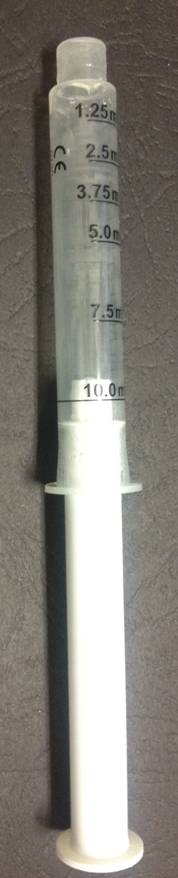
The proceeding concerns an invention for accurately serving up doses of liquid medicines for children. Apparently children don’t like taking medicine from syringes with nozzles because they remind them of bad things (injections). But syringes are the most accurate way to measure doses of medicine accurately. Solution: design a syringe that doesn’t quite look like one. The syringe in the patent looked like this

Patented embodiment
Patented embodiment

It was designed by Reckitt and called a flat nosed syringe (i.e. one without a nozzle). It fits into a plastic attachment inserted into the neck of a medicine bottle. The syringe fits tightly into the neck attachment and allows accurate dosages to be measured and then administered. Reckitt has patented its bottle-syringe-bottle neck arrangement. It uses it to sell nurofen for children. This has apparently given their nurofen product a substantial competitive advantage over Glaxo’s panadol (the medicines are largely interchangeable and parents chose the one that is easiest to use in terms of dose measurement and child acceptance).

Interestingly, despite being aware of and seeking to emulate the Reckitt product, Glaxo didn’t do any patent searches. It seems that this was because it was told by the third party manufacturers of the syringe and of the bottle and neck attachment that they as manufacturers held all of the relevant patents.[1] (They were wrong.)

Two injunctions were granted. On 28 May 2013 a Glaxo product that substantially replicated the Reckitt product was injuncted.[2] According to the Court’s reasons Reckitt’s only complaint was the similarity of the bottle neck liner.[3] This wasn’t, however, only what the patent claimed as its invention (remember, the aim was to design a syringe that didn’t look like one).

Version 1
Version 1

Glaxo then re-designed the shape of the syringe and advised Reckitt that it intended to sell their panadol with the offending bottle neck liner but with a different syringe. The re-designed syringe looked like this

Version 2
Version 2

Reckitt went back to Court to argue that this fell within claim 1 of the patent, which relevantly read:

A liquid dispensing apparatus comprising a bottle, a bottle neck liner and a flat-nosed syringe having a plunger and a barrel, the barrel terminating at its distal end in a generally flat face having a diameter corresponding to the diameter of the syringe and being perpendicular to the longitudinal access of the barrel….

The trial judge held that there was a sufficiently strong argument that the words

“having a diameter corresponding to the diameter of the syringe barrel and being perpendicular to the longitudinal access of the barrel”

would be understood by an addressee skilled in the art at the time of the patent to apply to the distal end of the barrel.[4] Accordingly, his Honour held that Reckitt had a sufficiently strong prima facie case that warranted the grant of an injunction. His Honour rejected Glaxo’s application to lead further evidence as to the balance of convenience and made orders restraining the sale of the re-designed product. Glaxo appealed.

It argued that the trial judge’s interpretation required the additional words “at its distal end” to be added to the above extract, and that this was impermissible. The Full Court agreed. Put simply, its view of the strength of Reckitt’s infringement case on the design-around syringe was substantially lower than that of the trial judge. It also said that the trial judge erred procedurally by forcing Glaxo to rely only on its balance of convenience evidence from the May hearing, and by rejecting the further balance of convenience evidence on which it sought to rely in July. At the May hearing the trial judge had rejected Glaxo’s evidence as to balance of convenience in strong terms and made findings in accordance with of evidence filed by Reckitt in reply to it. The Full Court said

It was, of course, a matter for the primary judge to make findings of fact based on the evidence before him. But having made strong findings of fact, which were directly contrary to Ms Tomkins’ first affidavit, in the context of assessing the balance of convenience at the first hearing, it is difficult to understand why GSK should be prevented at the second hearing from relying upon additional evidence from Ms Tomkins in the form of her second affidavit which expanded upon the reasons why the primary judge’s suggested option was impracticable and posed public health and safety risks (see further below). All the more so in circumstances where the second hearing took place more than six weeks after the first hearing and related to an allegation of patent infringement in respect of a different apparatus. These considerations are not displaced or diminished by s 37M of the FCA Act.

The case is a timely reminder that:-
1. leave to appeal against interlocutory orders in patent and like cases is a serious option;
2. applications relating to “design around” products need to be considered both substantively and procedurally as the separate applications that they are in fact; and
3. it is worth paying very careful attention to balance of convenience evidence, which is often a moving feast, and doing your best to make sure that the Court does too. Referring the Court to this case might just help in that endeavour.

GlaxoSmithKline Australia Pty Ltd v Reckitt Benckiser Healthcare (UK) Limited [2013] FCAFC 102

Susan Gatford is barrister on Gordon & Jackson’s list at the Victorian Bar. She practices out of Owen Dixon Chambers in Melbourne and is also a registered trade mark attorney.


  1. Reckitt Benckiser Healthcare (UK) Ltd v GlaxoSmithKline Australia Pty Ltd [2013] FCA 583 (Reckitt (No.1)) at [36].  ?
  2. Reckitt (No.1).  ?
  3. Reckitt (No.1) at [37].  ?
  4. Reckitt Benckiser Healthcare (UK) Ltd v GlaxoSmithKline Australia Pty Ltd (No 2) [2013] FCA 736 at [20].  ?

Dosing up children, overturning interlocutory injunctions and the balance of convenience Read More »

Scroll to Top