Assigning rights in future copyright – Bollywood style

Typically, a composer or lyricist who becomes a member of a performing right society (well, at least a performing right society in the British tradition) assigns the copyright insofar as it relates to “performing rights”[1] to the collecting society including all rights to Works they might make in the future.

Messrs Salim and Suleiman Merchant are apparently renowned composers of music for the soundtracks of Bollywood movies. In 1996 and 1998, respectively, they became members of the Performing Right Society, the PRS, the collecting society in the UK. As part of the terms of becoming members, they each agreed to assign to the PRS:

“absolutely for all parts of the world the rights which belong to you on the date of this Agreement or which you may acquire or own whilst you remain our member”.

However, in 2008, they signed up to compose the music for a film called Kurbaan. One of the terms of their contract with the producers, Dharma Productions Private Limited, was that all copyright in any music they wrote vested in Dharma Productions on creation.

Kurbaan was subsequently broadcast on B4U, apparently a broadcaster that specialises in all things Bollywood, including the Merchants’ music composed for the film. B4U refused to pay licence fees to the PRS.

B4U’s argued that the terms of the agreement with Dharma Productions meant that s 11 of the CDPA 1988[2] operated so that the Merchants never became the owner of any copyright in the Kurbaan music since it vested eo instanti on creation in Dharma Productions. Therefore, the Merchants never had any copyright in the music which could be assigned to the PRS.

Nice try!

The Court of Appeal said that the assignment to the PRS, being the first in time, took priority so s 91 of the CDPA[3] operated to assign the copyright to the PRS, on creation, and the Merchants had nothing to assign to Dharma.

Formally, the Court of Appeal focused on the wording in the PRS agreement that assigned any copyright that the composer may acquire while a member. Moses LJ treated this as sufficient to cover situations where, but for the agreement with Dharma Productions, the Merchants would have acquired copyright.

B4U Network (Europe) Limited v Performing Right Society Limited [2013] EWCA Civ 1236

Lid dip: Peter Clarke


  1. The APRA membership form defines these, with some exceptions, as the right to perform the work in public and to communicate it to the public.  ?
  2. Corresponding in effect to s 35(6) of our Act.  ?
  3. Corresponding to s 197 of our Act.  ?

Assigning rights in future copyright – Bollywood style Read More »

Winnebago 2: the disclaimer

Back in June, the Full Court, upheld the trial Judge’s conclusion that Knott was engaging in misleading or deceptive conduct, and passing off, by using the Winnebago “logos” to promote RVs of its (Knott’s) manufacture that had nothing to do with Winnebago USA. Because the breach was in the nature of “passing off” rather than trade mark infringement and because Winnebago USA had sat on its hands for 25 years allowing Knott to build up some goodwill of its own, however, the Full Court was prepared to grant an injunction only to restrain use of WINNEBAGO and the Winnebago logos by Knott which did not adequately disclaim association with the USA.
The Full Court has now handed down its decision about the form of that disclaimer:

without:

(f) where the name, mark or logo is used on one or more vehicles or in a document (including any print advertisement or webpage), stating in any relevant document (including any print advertisement or web page) or on any vehicle, clearly and prominently, and reasonably proximate to any name, mark or logo:

(i) (where the name, or mark or logo is used on or in relation to a single vehicle) “This vehicle was not manufactured by, or by anyone having any association with, Winnebago of the United States”; or …

In addition, radio and television commercials must have a prominent voiceover of no less than 10 seconds’ duration stating:

These vehicles were not manufactured by, or by anyone having any association with, Winnebago of the United States.

Also, Knott will be required to obtain a signed acknowledgement from each purchaser, hirer etc. that he or she has been informed the vehicles was “not manufactured by, or by anyone having any association with, Winnebago of the United States.”

Given the 25 year delay, the Full Court was not prepared to countenance allowing Winnebago USA to take an account of Knott’s profits.

The Full Court did, however, remit the matter back to the trial judge on the question of damages (limited to the six years before the proceeding was brought), but with an important rider.

Winnebago USA wants to argue that its damages should be a reasonable royalty on the use of its rights. The Full Court noted that other Full Court authority [1] appeared to stand in the way of that approach, but there might be scope for that to be revisited in light of the New South Wales Court of Appeal’s consideration of remedies for the unauthorised use of property in the context of conversion.[2]

The rider: before Winnebago USA gets to try this argument, it has to satisfy the trial Judge that there is “some prospect of a substantial (that is, real) award.”

Knott Investments Pty Ltd v Winnebago Industries, Inc (No 2) [2013] FCAFC 117


  1. Aristocrat Technologies Australia Pty Ltd v DAP Services (Kempsey) Pty Ltd (in liq) [2007] FCAFC 40; 157 FCR 564 at 569 [27]-[28].  ?
  2. Bunnings Group Ltd v CHEP Australia Ltd [2011] NSWCA 342; 82 NSWLR 420 at 464–470 [166]-[186].  ?

Winnebago 2: the disclaimer Read More »

Getting back domain names

Bromberg J has now made orders arising from his Honour’s finding that the use of real1.com.au infringed REA Group’s registered trade mark. Amongst other things, these included orders that the disputed domain names be transferred to REA Group. An expensive exercise in trying to generate value from “real 1”.

On the other hand, Middleton J has rejected Vendor Advocacy Australia’s attempts to get domain names like:

  • http://www.vendoradvocacy.com;
  • http://www.vendoradvocacyaustralia.com;
  • vendoradvocacymelbourne.com;

from a former employee (or contractor), Mr Seitanidis notwithstanding his Honour’s findings about much Mr Seitanidis’ conduct.

Vendor advocates are apparently much in the market these days. A Mr Ian Reid had been operating a vendor advocacy business for a number of years. Some of his advertising did include:

Vendor Advocacy Australia

but the corporate stationery and much of the other advertising took this form:

Corporate logo
Corporate logo

and the radio advertising also emphasised the personality of Mr Reid.

Vendor Advocacy Australia did not have any registered trade marks and was forced to fall back on misleading or deceptive conduct.

After a detailed discussion of the cases on descriptive terms and secondary meaning, Middleton J held:

…. The phrase “vendor advocacy” is descriptive and was generally used by various traders in the same line of business. I am not satisfied that the words or brand relied upon in this proceeding by VAA have any secondary distinctive meaning. VAA has primarily promoted itself by reference to the persona of Ian Reid. I do not consider that any consumer which assume that a reference to vendor advocacy, or Australian Vendor Advocacy, would be associated with VAA or Ian Reid. In fact, because Ian Reid has been so much at the front of the promotion of VAA, without his presence the consumer may well assume it is not associated with him or VAA. Any imperfect recollection of consumers would arise from VAA’s adoption of a name consisting of descriptive words. The lack of recall will be as a result of the promotional activity adopted by VAA, by reference to the descriptive words ‘vendor advocacy’.

 And so Vendor Advocacy Australia did not get orders for the transfer of the domain names.

One interesting consequence of this is that there may be an inquiry on the undertaking as to damages given for an interlocutory injunction preventing the use of some of the domain names.

Middleton J was willing to take at [257] a fairly robust view about consumers’ familiarity with the use of similar domain names by different companies. His Honour also thought any momentary or transitory confusion which might arise from the use of the domain names would not rise to the level of misleading or deceptive conduct. As his Honour reminded:

In circumstances where a trader adopts a descriptive trade name the use by another trader of a trade name that also uses those descriptive elements will not generally (in itself) constitute misleading or deceptive conduct.

His Honour also joined the growing band of judges who don’t think consumers pay much attention to whether domain names end in .com or .com.au or the like.


REA Group Ltd v Real Estate 1 Ltd (No 2) [2013] FCA 968

Vendor Advocacy Australia Pty Ltd v Seitanidis [2013] FCA 971

Getting back domain names Read More »

Patenting computer programs or business methods in Australia

At the end of August, Middleton J overturned the Commissioner’s refusal to grant an innovation patent for RPL’s computerised method entitled ‘Method and System for Automated Collection of Evidence of Skills and Knowledge’. Instead, his Honour held that the method was a manner of manufacture and, novelty and inventive step having been satisfied, patentable.

What the claimed invention was

In essence, the claimed invention allowed a user to access a single point of entry (for example, over the internet using his or her browser), retrieve information about particular qualifications, which was presented in the form of questions to the user, then provide answers and supporting documentation (still for example over the internet), which was then processed by a relevant certifying institution and, if the relevant criteria were satisfied, the relevant qualification would be awarded or, if not, the user could be presented with information about what further steps needed to be undertaken to satisfy the necessary criteria.[1]

This bald summary hardly does justice to what was involved. For example, there are a large number of registered training organisations or TAFEs (RTOs). Collectively, they offer some 3,500 different qualifications and some 34,000 Units of Competency. Any individual RTO therefore offered only a very small set of qualifications or units. RPL’s method, first, circumvented the need for an individual user to identify which RTO was appropriate as RPL’s method retrieved all the necessary information from online databases. Then, RPL’s method converted the criteria into a form of questions which the user could answer. So, to take an example from the judgment, the element of competency required for a particular unit relating to aged care:

demonstrate an understanding of the structure and profile of the aged care sector

became:

Generally speaking and based upon your prior experience and education, how do you feel you can demonstrate an understanding of the structure and profile of the aged care sector?

and a particular performance criterion associated with that:

all work reflects an understanding of the key issues facing older people and their carers

was converted in RPL’s method to:

How can you show evidence that all work reflects an understanding of the key issues facing older people and their carers?[2]

for enabling individuals to get their competency or qualifications recognised under the nationally accredited Unit of Competency scheme.

The specification identified the advantages flowing from this method with its single point of contact:[3]

Individuals are provided with a service which simplifies the identification of relevant Units of Competency, and the gathering of associated assessment information to enable [recognition of prior learning] to be performed. Training organisations are relieved of much of the administrative cost associated with performing [recognition of prior learning]. By the time the training organisation is contacted, the relevant Unit of Competency has already been identified, and required information associated with each of the assessable criteria has already been gathered and packaged in a form enabling an efficient assessment in relation to the [recognition of prior learning] process.

Why this constituted a (patentable) manner of manufacture

Middleton J noted at [127] that the test for “manner of manufacture” laid down in NRDC, CCOM and Grant required that the claimed invention result in an artificially created state of affairs in which a new and useful effect may be observed. This had to be of utility in practical affairs or be of an industrial, commercial or trading character and belong to the useful arts, not the fine arts, so that its value lay in a field of economic endeavour.

These criteria were satisfied. The results of the method were useful because at [129] it overcame difficulties involved in seeking out education providers and enabled recognition of prior learning. This was relevant to a field of economic endeavour: the education sector of the economy and thus had the necessary industrial, commercial or trading character.

While the information about RTOs and particular Units of Competency could be accessed individually in undifferentiated form over the internet, the method provided a single point of entry. In addition to the single point of entry:

[141] The computer programmed in accordance with the Patent further operates to process the retrieved information and to automatically generate data comprising an alternate means of presentation. This alternate means comprises a series of questions which can be presented to an individual user along with user interface elements which implement an online form suitable for the receipt of responses to those questions. An assessment server is programmed, again according to the teaching of the Patent, to present the form to the computer of an individual user, who preferably requires only conventional web browser software to access the assessment server via the internet. In particular, the form provides not only for user-entered responses, but also for upload of one or more files stored on the user’s computer which may comprise, for example, evidence of the user’s competency with regard to the recognised qualification standard. This access to an online form occurs as a result of the retrieval, processing and presentation steps being conducted according to the teaching of the Patent.

The various stages in this process each gave rise to the physical effect required under Grant in the various changes of state in the computer’s memory.[4] Grant itself of course involved no such transformation since it did not involve any use of any computer – just a scheme for the use of a trust.

The Commissioner had recognised that such a transformation did take place, but it was not sufficient. In a line of decisions beginning with Invention Pathways, the Commissioner had ruled that: [5]

the “concrete effect or phenomenon or manifestation or transformation” referred to must be one that is significant both in that it is concrete but also that it is central to the purpose or operation of the claimed process or otherwise arises from the combination of steps of the method in a substantial way. Consequently while the step of building a house involves a concrete physical effect it is peripheral to the method of acquiring a house and indeed could hardly be said to characterise the subject matter of the method such that it is considered an artificially created state of affairs. I consider the same to apply to a business scheme implemented in some part by computer and do not believe the patentability of such a method can arise solely from the fact that, in a general sense, it is implemented in or with the assistance of a computer or utilises some part a computer or other physical device in a incidental way.”

The Commissioner argued that the use of the computer here was not central to the method, being merely a “common mechanism to carry out the method in a convenient way.”

At [147], Middleton J rejected the Commissioner’s view that NRDC, CCOM and Grant required the requirement of substantiality or centrality of a physical effect in the sense the Commissioner contended for.

In addition, Middleton J rejected the Commissioner’s argument that the claimed invention could not be a manner of manufacture as it could be performed without the use of a computer. His Honour rejected this as a matter of principle at [157]: it was not an appropriate way to approach the assessment required under NRDC, CCOM and Grant. In any event, as a matter of fact, the magnitude of the task meant it wasn’t practicable without the use of a computer:

[158] … as a matter of fact I accept that the magnitude of the task performed by the invention (as previously described) and the express terms of the claims themselves mean that the computer is an essential part of the invention claimed, as it enables the method to be performed.

While his Honour accepted that US cases could be persuasive, he noted he was required to apply the tests developed under Australian law and did not find any assistance in the present context.[6]

At [171] – [172], Middleton J distinguished the recent rejection by Emmett J of Research Affiliates claims for a method of generating an index of securities and assets. In Middleton J’s view the central difference was that the specification in Research Affiliates “contained virtually no substantive detail about how the claimed method was to be implemented by a computer”.[7] In contrast, there was detailed information about these matters in RPL’s specification and the computer was central to the method’s working.

RPL Central Pty Ltd v Commissioner of Patents [2013] FCA 871


  1. The terms of claim 1 are set out here.  ?
  2. Taken from [21] and [24] of the Reasons.  ?
  3. At [42] of the Reasons.  ?
  4. At [143] – [144].  ?
  5. Myall at [53].  ?
  6. While his Honour did not put it this way, that is perhaps unsurprising given the rather uncertain state of the US case law, e.g.  here and here.  ?
  7. An application for leave to appeal from Emmett J’s decision has been filed: NSD328/2013.  ?

Patenting computer programs or business methods in Australia Read More »

When do 4 stripes infringe 3?

adidas has successfully sued Pacific Brands for infringing its “3 stripes” trade mark through the sale of three styles of shoes with 4 stripes; but failed in respect of six other styles. Three other styles settled before action, 2 without admissions.

adidas relied on 2 registered trade marks, TM No 131325 dating from 1957 and TM No 924921 dating from 2002. (If you have been on Mars for the last 50 years) you get the basic picture from TM No 924921:

TM 924921
TM 924921

registered for “footwear including sport shoes and casual shoes” in class 25. There is also an endorsement:

Trade Mark Description: The trademark consists of three stripes forming a contrast to the basic color of the shoes; the contours of the shoe serves to show how the trademark is attached and is no component of the trademark. * Provisions of subsection 41(5) applied.*

First, accepting that the stripes played a decorative role, Robertson J nonetheless found that Pacific Brands used all the stripe combinations on the shoe styles in issue as trade marks. In reaching this conclusion, his Honour was heavily influenced at [64] by the evidence [1] that sports shoe manufacturers typically placed their trade marks on the side of the shoe. Consistently with orthodoxy, it was nothing to the point that consumers might not know which manufacturer was actually behind the product or that other trade marks such as “Grosby” also appeared on the shoe.

The Airborne Shoe illustrates why Robertson J held some styles infringed:

Airborne shoe
Airborne shoe

The fact that there were 4 stripes rather than 3 tended against a finding or infringement. However, that was outweighed by the overall impression conveyed. At [235], his Honour explained:[2]

this shoe is deceptively similar to the applicants’ trade marks. I note in particular the parallel equidistant stripes of equal width (with blue edgings) in a different or contrasting colour to the footwear, running from the lacing area to the instep area of the shoes.

In contrast, the shoes found not to infringe were all found not to convey the sense of equidistant stripes against a contrasting background, let alone a sub-set of three “parallel” stripes.[3]

Perhaps, most strikingly, the Basement style at [282] conveyed the idea of two sets of two stripes rather than three or four equidistant stripes.

Basement shoe
Basement shoe

Next, the Boston shoe:

Boston shoe
Boston shoe

did not convey the idea of a group of stripes against a contrasting background:

there are four stripes rather than three and an obvious slightly wider gap between the second and third stripes. That is the first point. I do not conclude that there are two groups of two stripes. In addition, the inclusion of panels in the shoe of a similar colour to the stripes (black or close to black), and the stitched-in element of contrasting colour (white) extending behind the stripes, mean that as a matter of impression there is no deceptive similarity with the applicants’ trade marks. There is no sufficiently clear impression of the stripes forming a contrast to the basic colour of the shoes or being a colour different from that of the article of footwear to which the stripes were applied.

The idea of four stripes with the central pair “bridged” extended through into the Apple Pie Pink style at [296]:

Apple Pie shoe
Apple Pie shoe

Robertson J also found that the Stingray Black style did not infringe:

Stingray Black shoe
Stingray Black shoe

At [305], his Honour explained:

there are four “stripes”; the stripes taper to a narrower end towards the sole of the shoe and are therefore not of equal width; the gaps between the stripes are not equal and taper towards the top of the shoe at the lacing; and the four stripes have a curved element and are therefore not parallel. The features of the applicants’ trade marks relied on by the applicants in relation to this shoe are not those which give rise to the dominant visual impression of the trade marks as three parallel equidistant stripes of equal width. This shoe does not create the visual impression of three parallel equidistant stripes of equal width.

A couple of other points

First, Robertson J did not buy adidas’ invitation to infer an intention to infringe, or at the very least “to sail too close to the wind”[4] from an alleged pattern of copying. Pacific Brands withdrew two shoe styles said to be the foundation of this pattern without any admission of liability. A third style, the Stringray boot was withdrawn with an admission, but his Honour regarded that matter as resolved.

Secondly, adidas made an interesting attempt to bolster its case on infringement by the use of a survey. The survey purported to show that some 14%, 34% and 19% of those shown three different styles “similar” to Pacific Brands’ styles identified adidas as the source of the product because of the presence of stripes.

The survey was conducted online. Each participant was shown one of four images of a leg with a shoe style on its foot. (Three were intended to be versions of Pacific Brand styles; one, the control, was unmarked.) The participants were then asked a series of questions including:

B1. Who do you think makes this shoe?

B2. Why do you say that? Please be specific and explain the reasons for your answer in question B1.

Robertson J, however, accorded the survey little weight in making his assessment. There were a variety of reasons for this. These included, first, at [196] that the showing of the images online did not sufficiently replicate or correspond to the experience of the consumer in the market place (apparently this is known as “ecological validity”). Secondly, at [205] question B1 was impermissibly leading. Thirdly, at [210]-[211] the “control leg” was inadequate for the purpose because the absence of decoration signalled to some consumers that it was not sourced from a major brand.

adidas AG v Pacific Brands Footwear Pty Ltd (No 3) [2013] FCA 905 (version with images here)


  1. Referred to at [54].  ?
  2. Likewise, the Stingray shoe at [293] and the Apple Pie at [296].  ?
  3. At [217], his Honour found these features constituted the dominant impression conveyed by the registered trade marks.  ?
  4. Invoking the well-known formulation from Australian Woollen Mills at 658.  ?

When do 4 stripes infringe 3? Read More »

Dosing up children, overturning interlocutory injunctions and the balance of convenience

An IPwars first: my colleague, Susan Gatford, provies an update in which a Full Court overturned an interlocutory injunction against an alleged patent infringement. Do you agree with Sue that a trend seems to be developing?

Remember way back at the start of the Apple v Samsung litigation the Full Court dissolved the interlocutory injunction granted to Apple? Well, they did it again earlier this month in GlaxoSmithKline Australia Pty Ltd v Reckitt Benckiser Healthcare (UK) Limited.

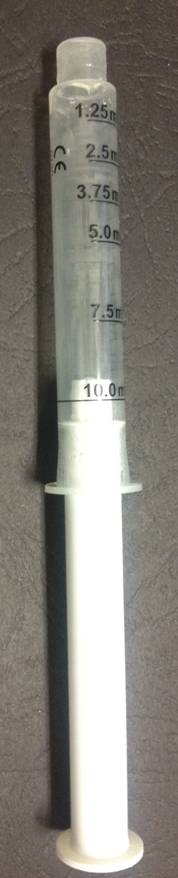
The proceeding concerns an invention for accurately serving up doses of liquid medicines for children. Apparently children don’t like taking medicine from syringes with nozzles because they remind them of bad things (injections). But syringes are the most accurate way to measure doses of medicine accurately. Solution: design a syringe that doesn’t quite look like one. The syringe in the patent looked like this

Patented embodiment
Patented embodiment

It was designed by Reckitt and called a flat nosed syringe (i.e. one without a nozzle). It fits into a plastic attachment inserted into the neck of a medicine bottle. The syringe fits tightly into the neck attachment and allows accurate dosages to be measured and then administered. Reckitt has patented its bottle-syringe-bottle neck arrangement. It uses it to sell nurofen for children. This has apparently given their nurofen product a substantial competitive advantage over Glaxo’s panadol (the medicines are largely interchangeable and parents chose the one that is easiest to use in terms of dose measurement and child acceptance).

Interestingly, despite being aware of and seeking to emulate the Reckitt product, Glaxo didn’t do any patent searches. It seems that this was because it was told by the third party manufacturers of the syringe and of the bottle and neck attachment that they as manufacturers held all of the relevant patents.[1] (They were wrong.)

Two injunctions were granted. On 28 May 2013 a Glaxo product that substantially replicated the Reckitt product was injuncted.[2] According to the Court’s reasons Reckitt’s only complaint was the similarity of the bottle neck liner.[3] This wasn’t, however, only what the patent claimed as its invention (remember, the aim was to design a syringe that didn’t look like one).

Version 1
Version 1

Glaxo then re-designed the shape of the syringe and advised Reckitt that it intended to sell their panadol with the offending bottle neck liner but with a different syringe. The re-designed syringe looked like this

Version 2
Version 2

Reckitt went back to Court to argue that this fell within claim 1 of the patent, which relevantly read:

A liquid dispensing apparatus comprising a bottle, a bottle neck liner and a flat-nosed syringe having a plunger and a barrel, the barrel terminating at its distal end in a generally flat face having a diameter corresponding to the diameter of the syringe and being perpendicular to the longitudinal access of the barrel….

The trial judge held that there was a sufficiently strong argument that the words

“having a diameter corresponding to the diameter of the syringe barrel and being perpendicular to the longitudinal access of the barrel”

would be understood by an addressee skilled in the art at the time of the patent to apply to the distal end of the barrel.[4] Accordingly, his Honour held that Reckitt had a sufficiently strong prima facie case that warranted the grant of an injunction. His Honour rejected Glaxo’s application to lead further evidence as to the balance of convenience and made orders restraining the sale of the re-designed product. Glaxo appealed.

It argued that the trial judge’s interpretation required the additional words “at its distal end” to be added to the above extract, and that this was impermissible. The Full Court agreed. Put simply, its view of the strength of Reckitt’s infringement case on the design-around syringe was substantially lower than that of the trial judge. It also said that the trial judge erred procedurally by forcing Glaxo to rely only on its balance of convenience evidence from the May hearing, and by rejecting the further balance of convenience evidence on which it sought to rely in July. At the May hearing the trial judge had rejected Glaxo’s evidence as to balance of convenience in strong terms and made findings in accordance with of evidence filed by Reckitt in reply to it. The Full Court said

It was, of course, a matter for the primary judge to make findings of fact based on the evidence before him. But having made strong findings of fact, which were directly contrary to Ms Tomkins’ first affidavit, in the context of assessing the balance of convenience at the first hearing, it is difficult to understand why GSK should be prevented at the second hearing from relying upon additional evidence from Ms Tomkins in the form of her second affidavit which expanded upon the reasons why the primary judge’s suggested option was impracticable and posed public health and safety risks (see further below). All the more so in circumstances where the second hearing took place more than six weeks after the first hearing and related to an allegation of patent infringement in respect of a different apparatus. These considerations are not displaced or diminished by s 37M of the FCA Act.

The case is a timely reminder that:-
1. leave to appeal against interlocutory orders in patent and like cases is a serious option;
2. applications relating to “design around” products need to be considered both substantively and procedurally as the separate applications that they are in fact; and
3. it is worth paying very careful attention to balance of convenience evidence, which is often a moving feast, and doing your best to make sure that the Court does too. Referring the Court to this case might just help in that endeavour.

GlaxoSmithKline Australia Pty Ltd v Reckitt Benckiser Healthcare (UK) Limited [2013] FCAFC 102

Susan Gatford is barrister on Gordon & Jackson’s list at the Victorian Bar. She practices out of Owen Dixon Chambers in Melbourne and is also a registered trade mark attorney.


  1. Reckitt Benckiser Healthcare (UK) Ltd v GlaxoSmithKline Australia Pty Ltd [2013] FCA 583 (Reckitt (No.1)) at [36].  ?
  2. Reckitt (No.1).  ?
  3. Reckitt (No.1) at [37].  ?
  4. Reckitt Benckiser Healthcare (UK) Ltd v GlaxoSmithKline Australia Pty Ltd (No 2) [2013] FCA 736 at [20].  ?

Dosing up children, overturning interlocutory injunctions and the balance of convenience Read More »

Designs Act 2003 review

In May 2012, ACIP was directed to investigate the effectiveness of the Designs Act 2003 which commenced operation on 17 June 2004.

Now ACIP has published an issues paper.

Chapter 3 sets out 22 questions ACIP is seeking answers to. However, ACIP does also say:

the main purpose of the paper is to provoke discussion and any other relevant comments are very welcome.

The topics identified (so far) for comment include:

  • Duration of design protection
  • Grace period
  • Statement of Newness and Distinctiveness
  • Publication
  • Unregistered Designs Rights (UDRs)
  • Harmonisation with international practices (i.e. The Hague Agreement)
  • Border Protection Measures
  • Design overlap with other IP rights
  • Threshold of registrability
  • Confusion regarding the registration/publication/examination process;
  • The (potential) impact of new technologies, such as 3D printing technologies and graphical user interfaces.

There are some interesting statistics:

  • about 6,000 design applications filed each year (the Germans do 50,000+ a year, the Chinese are a whole order of magnitude bigger)
  • 90% proceed to registration (wonder how the other 10% manage to stuff up filling in the form?)
  • 20% of registrations have examination requested (so you can sue someone for infringement or try and revoke them)
  • 10% of those examined fail (i.e., 90% get certified)

Table 4 sets out the classes in which most applications are being made and Table 5 outs those who file the most applications.

The closing date for submissions is 31 October 2013.

Download the issues paper from here (pdf).

Lid dip: Janice Luck

Designs Act 2003 review Read More »

Re-thinking the role of IP: Francis Gurry lecture

Last week, the 5th Francis Gurry Lecture at the University of Melbourne was given by Dr Francis Gurry, the Director-General of WIPO (and so the highest ranking Australian official in UN organisations), himself. The topic “Re-thinking the Role of IP’.

Dr Gurry’s central theme was that the context in which intellectual property operates has changed so much that the way in which we think about IP and its role in society needs to be reconsidered.

One of the key changes Dr Gurry identified was the economic shift from wealth derived from tangibles to wealth generation deriving from intangibles. As one indicator of this, Dr Gurry pointed out that US industries in the IP field accounted for some 35% of its GDP. Another indicator showed that in 1978 95% of the value of the Standard & Poors 500 came from tangible assets, down to 20% in 2010.

The second key change Dr Gurry identified was the economic shift from the West to the East. China is now the second largest investor in R & D in absolute terms in the world. Japan the third.

The third key change identified was the empowerment of non-state actors. One illustration of this was the Day the Internet went Dark. More than 115,000 websites closed or limited access. More than 2.4 million anti-SOPA tweets were generated. One of my favourite images (lid dip Marty Schwimmer was the impact on the US Congress:

sopa-pipa-one-day

We are seeing a little bit of that here.

Of course, the Department of Homeland Security, or the FBI, also flexed its muscles.

Among the many consequences arising from these changes:

  • much greater focus on IP and much greater intensity – Smartphone wars anyone, industrial espionage
  • much greater attention to what IP rights are granted for and focus mediating what is acceptable to the general public

Although not an example used by Dr Gurry, we have seen that here too. Dr Gurry did point out, however, an apparent paradox:

No one minds, it seems, someone making billions out of new social networking or media technology, but there is widespread social unease at someone making billions out of a new life-saving drug. Which outcome do we want to achieve in the innovation system?

Dr Gurry went on to explain that this changes in turn raised many questions for entitlement, appropriability and policy-making. Dr Gurry’s presentation in written form can be found here (pdf). Definitely repays reading. Lid dip @MsSamMcHugh


Update: A video of the lecture and the paper itself can now be found here.

Re-thinking the role of IP: Francis Gurry lecture Read More »

Innovation Patents: what to do?

ACIP has released an options paper on what to do about the innovation patent system.

An innovation patent is a uniquely Australian contribution towards encouraging innovation. You can get one (if you apply for it) for pretty much anything[1] unless it differs from the prior art only in ways that “make no substantial contribution to the working of the [ahem] invention” as explained by the Full Court in the Delnorth case.

As recounted in the options paper, the basic objective of the innovation patent system is to encourage and promote investment in innovation by Australian (especially) SMEs.

The options paper is full of interesting statistics and there is an accompanying economics paper, the Verve report attempting to get some empirical data. For example, only about 25% of innovation patents ever get certified. Also, more than 50% of innovation patents are allowed to lapse by the end of their third year. The proportion of innovation patents granted to foreigners is 35% and rising.

Insofar as the options paper takes a position, it would seem that there is pretty much universal agreement that the level of innovation required to get an innovation patent is too low.

The options paper also appears to discern evidence that innovation patents are being used “strategically” or “tactically”, at least by some applicants.

ACIP is now seeking your views on what to do.

ACIP itself identifies 3 broad options:

(1) do nothing (option A);

(2) abolish the innovation patent system (option B); or

(3) change the innovation patent system (option C).

Option A: do nothing

ACIP notes that it is too soon to tell how the Raising the Bar reforms will affect those seeking innovation patents. Those changes do nothing, of course, to the level of “innovative step”.

The Verve report received 517 responses to its survey of the 3,195 Australian inventors who have taken out innovation patents to protect their “inventions”. Bearing in mind that these are the people that the innovation patent system is supposed to be encouraging, ACIP notes:

The Verve survey has shown that individuals and SME user-groups appear to be generally satisfied with the innovation patent system—albeit this survey occurring prior to the full impacts of the Raising the Bar Act being felt by users of the system.

The biggest problem with this do nothing option, however, is that it doesn’t do anything to address the apparently widely recognised issue that the innovation threshold is too low.

As ACIP notes, letting people get an innovation patent in Australia for something which is not patentable anywhere else does nothing to encourage Australian businesses to compete overseas. It should also be borne in mind that an innovation patent over something will probably have the effect of meaning its price will be higher than it would otherwise have been.

Option B: abolish the innovation patent system

There is a nice catalogue of what one might think were compelling reasons why this is a good option. There is also a summary of arguments against it.

This (or a variation on it) is widely perceived to be the option proposed late last year by IP Australia. The options paper indicates that the majority of non-confidential submissions to IP Australia and to ACIP didn’t support IP Australia’s proposal.

The options paper also includes a curious page suggesting that the designs registration system could be amended to permit the registration of functional designs. I (perhaps mistakenly) had thought the Franki Committee’s recommendations were implemented by the Designs Amendment Act 1981 s 11 (inserting new s 18) and s 5 (inserting a new definition of ‘design’) and find their current embodiment in s 7(2) of the Designs Act 2003. The “problem”, if it be a problem, with designs registration is that it protects only the visual appearance of a product, not its function. The new Act doesn’t seem to be any different in that respect to the old Act and it was plainly a deliberate policy choice.[2]

Option C: change the innovation patent system

The problem here, at least insofar as the level of innovation is concerned, is what should that new level be and how on earth would the Courts ever work it out. ACIP plainly didn’t like the suggestions of the Law Council, IPTA or FICPI on this front.

The options paper also raises for further consideration changing or limiting the remedies: no injunction or no interlocutory injunctions, but continued exposure to pay damages or account for profits; limiting the ability to recover pecuniary remedies to the period after certification. Oh dear!

ACIP would like to hear your views by 4 October 2013. It is also planning to hold workshops for public consultation during September.

Options Paper here (pdf)

Verve report here


  1. Patents Act 1990 s 18(2) and (3) exclude some things from patentable subject matter and, apart from the level of innovation prescribed in s 7(4), there are a few other largely technical requirements to satisfy too.  ?
  2. See e.g. recommendations 24, 25 and 26 of the ALRC’s Designs report. Of course, the limitation of the designs registration system to visual appearance only seemed to be one of the main complaints about the system identified by the ALRC: see e.g. 2.44 of the ALRC’s report and 3.49 and 6.5.  ?

Innovation Patents: what to do? Read More »

Scroll to Top